
 Cannabis 101
Kratom vs. Cannabis: Comparing Two Very Different Plants
Published On 09-09-2026
Published by Dispensary.Click Research & Editorial Team
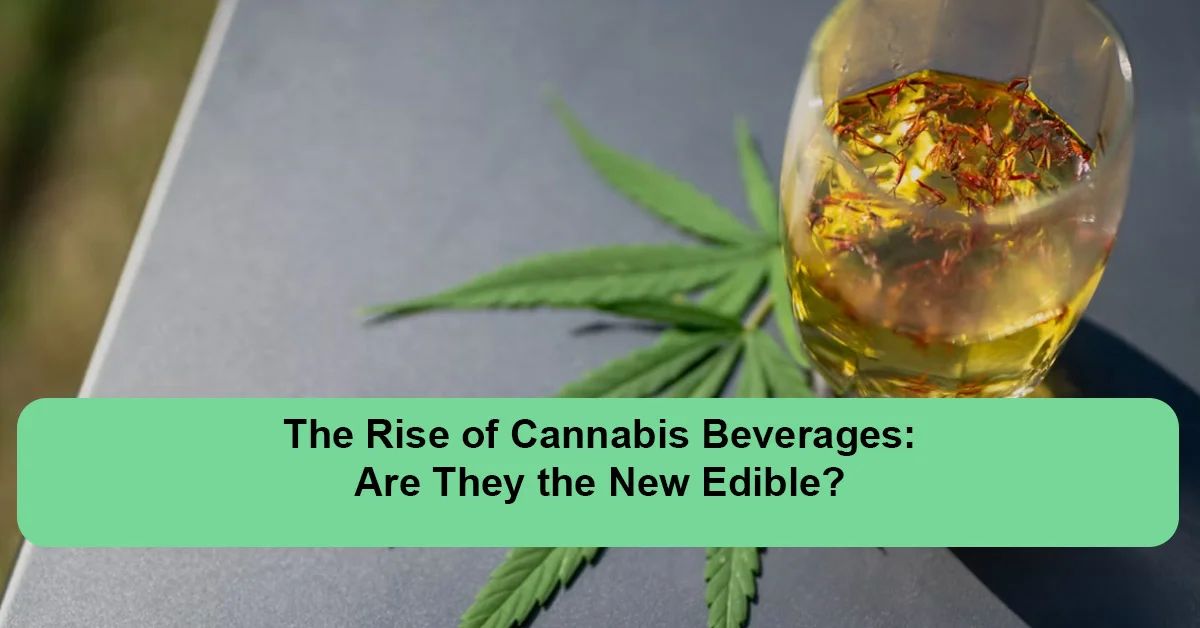
Cannabis-infused seltzers, sodas, and drink mixes have gone from a novelty item stocked in a single dispensary cooler to a genuine growth category with dedicated brands, flavor lineups, and a customer base that increasingly treats them as a real alternative to alcohol rather than a curiosity. That shift raises a fair question for anyone who's used traditional edibles before: are beverages actually a meaningfully different product, or just a gummy in liquid form with better marketing?
The honest answer is that beverages solve a specific set of problems traditional edibles never fully addressed, and understanding those differences helps explain both why the category is growing and whether it's the right format for how you actually want to use cannabis. If precise, adjustable dosing matters most to you, it's also worth comparing beverages against cannabis tinctures, another liquid format built around dosing control rather than speed.
Traditional edibles rely on THC that's fat-soluble, meaning it doesn't dissolve in water or mix evenly into a liquid on its own. Cannabis beverages solve this using nano-emulsion technology, breaking THC down into microscopic, water-compatible particles that can be evenly suspended in a drink rather than separating out or clumping at the bottom of the can.
This isn't just a manufacturing trick, it directly changes how the product behaves once you drink it. Because the particles are so much smaller than in a standard edible, your body absorbs them faster and more efficiently, which is the reason nano-beverages typically produce effects within 15 to 30 minutes rather than the 45 to 90 minute wait associated with a traditional gummy or baked good.
The slow, unpredictable timing of traditional edibles has always been one of the format's biggest drawbacks. People routinely misjudge dosing because nothing seems to be happening after 30 minutes, then take more, only to get hit with both doses at once later. A beverage that behaves more like alcohol, noticeable effects within a similar timeframe to a drink kicking in, removes a lot of that guesswork and makes the format feel far more familiar and controllable to anyone accustomed to social drinking.
| Factor | Traditional Edibles | Cannabis Beverages |
|---|---|---|
| Typical onset | 45 to 90 minutes | 15 to 30 minutes |
| Duration of effects | Often 4 to 8 hours | Often shorter, roughly 2 to 4 hours |
| Dosing format | Fixed per piece (gummy, chocolate square) | Often lower per-serving dose, sippable over time |
| Social context | Less associated with a shared social ritual | Closely mirrors the alcohol-drinking social experience |
| Common formats | Gummies, baked goods, chocolates | Seltzers, sodas, drink mixes, shots |
The shorter duration is a meaningful tradeoff worth understanding. Faster onset generally comes paired with a shorter overall high, closer to what smoking or vaping produces than the long, slow-building experience associated with a traditional edible. Whether that's an advantage depends entirely on what you're looking for from the experience.
Calling beverages the new edible undersells what's actually different about them. They're not simply a reformulated gummy, they're purpose-built to replicate a completely different consumption occasion. Edibles are typically a solitary or planned experience, you eat one, wait, and settle in for several hours. Beverages are designed for the same social contexts alcohol occupies, happy hour, a backyard gathering, a night out, where lower, sippable doses and faster, more predictable feedback matter more than a long-lasting, potent effect.
Cannabis beverages exist in a more complicated regulatory position than most other cannabis products, partly because they sit adjacent to both cannabis law and, in many cases, alcohol retail regulation depending on the state. Some states regulate cannabis beverages exclusively through their cannabis licensing framework, sold only through licensed dispensaries, while others have explored allowing hemp-derived, low-THC beverages through more general retail channels similar to how CBD products are sold. This regulatory patchwork means availability and where you can legally buy a cannabis beverage varies more by state than most other cannabis product categories, and a format widely available in one state might be tightly restricted or entirely unavailable through non-dispensary channels in another.
Checking your specific state's rules before assuming a beverage you've seen marketed online or in another state is available locally is a reasonable precaution, since cannabis beverage regulation is one of the faster-moving areas of state cannabis law right now.
Cannabis beverages are a strong fit if you're specifically looking for a lower-key, social-friendly alternative to alcohol, want a faster and more predictable onset than a traditional edible offers, or simply prefer drinking something over eating a piece of candy or baked good to consume cannabis. They're less ideal if your goal is a long, deeply immersive high that lasts through an entire evening from one dose, since the shorter duration typical of beverages may mean needing a second drink later to maintain the effect.
Cannabis beverages aren't replacing edibles so much as carving out their own distinct category that fills a gap traditional edibles were never well-suited for, a fast, social, lower-commitment cannabis experience that mirrors how people already drink socially. As more states expand access to cannabis beverages and nano technology continues improving, expect this category to keep growing as a genuine alternative to alcohol in social settings, rather than remaining a niche curiosity.
This article was reviewed by the Dispensary Click Editorial Team for accuracy, clarity, and relevance. Information may be sourced from publicly available cannabis resources, state regulatory agencies, and lab-testing references where applicable.
Last reviewed: September 2026
Cannabis 101
 Cannabis 101
 Cannabis 101
 Cannabis 101