
 Strains & products
Sativa Effects: What They Actually Feel Like
Published On 03-10-2026
Published by Dispensary.Click Research & Editorial Team
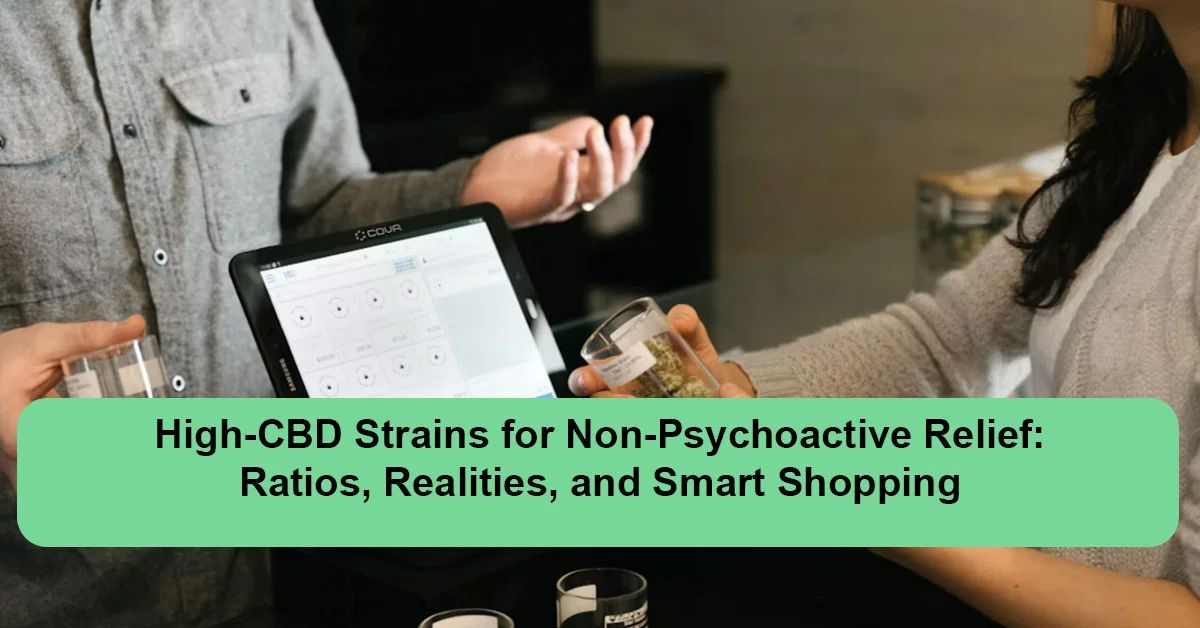
Not everyone walking into a dispensary wants to get high. Some shoppers want to unwind after work without feeling foggy. Others are curious about cannabis but worried about anxiety or impairment. For these people, high-CBD strains are often the starting point.
This guide explains what "non-psychoactive" really means in practice, how CBD-to-THC ratios shape the experience, which high-CBD strains are well established, and what the scientific evidence does and does not support. It also covers the safety and legal details that many CBD articles skip.
CBD (cannabidiol) does not produce the intoxicating high associated with THC. That much is well established. But the word "non-psychoactive" can be misleading in two ways.
First, CBD does act on the brain. It is the active ingredient in an FDA-approved prescription medication for certain seizure disorders, and some people report feeling calmer or drowsy after using it. "Non-intoxicating" is the more accurate description.
Second, high-CBD cannabis flower almost always contains some THC. Depending on the strain and batch, that amount may be barely noticeable or enough to cause mild intoxication, especially if you consume a lot or are sensitive to THC. The ratio between the two compounds matters more than the CBD number alone.
Researchers and many cultivators sort cannabis into three broad chemical types. Knowing which one you are buying will set realistic expectations.
| Type | Typical Profile | What to Expect | Best For |
|---|---|---|---|
| Type I: THC-dominant | High THC, little to no CBD | Clearly intoxicating | Most adult-use shoppers seeking a high |
| Type II: Balanced | Similar amounts of CBD and THC, such as 1:1 or 2:1 | Noticeable but often gentler effects; still impairing | People wanting mild effects with some THC |
| Type III: CBD-dominant | High CBD, low THC, such as 10:1 or higher | Minimal intoxication for most people at modest doses | Shoppers who want to avoid feeling high |
A ratio such as 20:1 means there is roughly 20 times more CBD than THC. Higher ratios generally mean less intoxication. Even so, the actual THC content per dose still matters, so check both percentages on the label.
The strains below have been grown for years and have relatively established reputations. Ratios listed are commonly reported ranges, not guarantees. Because CBD and THC levels can vary considerably between growers and harvests, always confirm with the lab results for the specific product in front of you.
ACDC is one of the most widely recognized CBD-dominant strains. It is commonly reported at very high CBD-to-THC ratios, sometimes around 20:1, which makes it a frequent recommendation for people who want to avoid intoxication. Consumers tend to describe its aroma as earthy and woody with a hint of citrus.
Harlequin typically falls into the balanced-to-CBD-leaning range, with ratios often cited near 5:2. Because it carries more THC than ACDC, some people notice mild effects. It has a reputation among consumers for staying clear-headed, and its aroma leans earthy and musky with a sweet edge.
Cannatonic was one of the early strains bred specifically for high CBD. It is notably variable: some batches lean strongly toward CBD while others are closer to balanced. That inconsistency makes checking the label especially important.
Ringo's Gift is a cross of ACDC and Harle-Tsu, named after Lawrence Ringo, a breeder known for his work developing high-CBD cannabis. It is often found at high CBD ratios and appeals to people looking for a low-THC option with a bit of variety in flavor.
Sour Tsunami is another early high-CBD strain linked to Lawrence Ringo's breeding work. It is often noted for a diesel-tinged aroma that sets it apart from earthier CBD strains.
Pennywise, a cross of Harlequin and Jack the Ripper, is generally closer to a 1:1 ratio. It is better suited to people who want a gentle, balanced experience and are comfortable with some THC effects, rather than those seeking near-zero intoxication.
Charlotte's Web is one of the most famous CBD names, but it is primarily associated with a hemp-derived product line rather than dispensary flower. Its story, named after Charlotte Figi, whose severe epilepsy drew national attention, helped shape public interest in CBD. If you see the name, check whether you are looking at a branded hemp product or a dispensary strain.
This is where honest information matters most. CBD has generated enormous interest, but strong evidence exists for only a narrow set of uses.
The FDA has approved a purified CBD medication, Epidiolex, for seizures associated with Lennox-Gastaut syndrome, Dravet syndrome, and tuberous sclerosis complex. That approval was based on controlled clinical trials using pharmaceutical-grade CBD at carefully measured doses. Those results cannot be assumed to apply to smoking or vaping CBD flower, which delivers different and less predictable amounts.
Research into CBD for anxiety, sleep, pain, and inflammation is active, and some studies show encouraging signals. However, results are mixed, many studies are small, and doses used in research are often much higher than what people get from flower. Many people report that CBD helps them relax or feel more comfortable, and those experiences are real to them, but personal reports are not the same as proven effects.
High-CBD cannabis is not a proven treatment, cure, or prevention for any disease. If you are dealing with a medical condition, ongoing pain, anxiety, or sleep problems, talk with a healthcare professional. They can help you weigh options and identify risks specific to your situation.
CBD is processed by liver enzymes that also break down many prescription medications. It can change blood levels of some drugs, including certain blood thinners and anti-seizure medications. If you take any prescription medication, ask your doctor or pharmacist before using CBD.
Reported side effects of CBD include drowsiness, diarrhea, and changes in appetite. At the doses used in clinical trials, elevated liver enzymes have been observed in some patients.
Because high-CBD flower contains some THC, it can impair driving, particularly balanced strains. Do not drive after using any cannabis product. CBD flower and full-spectrum products can also lead to a positive drug test for THC, which matters if you are subject to workplace or legal testing.
Health authorities advise against cannabis and CBD use during pregnancy and breastfeeding because the effects on development are not well understood.
High-CBD products are sold in two very different channels. Licensed dispensaries in states with medical or adult-use programs sell CBD-dominant cannabis that goes through state-mandated testing. Separately, hemp-derived CBD products have been sold more widely under federal hemp rules, with oversight that varies by state.
That landscape is shifting. Congress passed a law in November 2025 that redefines hemp using a total THC standard, which counts THCA, and sets a very low THC cap for finished hemp products. It is scheduled to take effect in late 2026, and legal analysts expect it to affect many hemp-derived products, including some full-spectrum CBD items. Details and timing may still change through further legislation or federal guidance, and state laws add another layer. If you rely on hemp CBD products, check current federal and state rules before buying or traveling.
Dispensary.click's dispensary listings and strain pages can help you find shops near you and research specific high-CBD strains before your visit. Calling ahead to confirm which CBD-dominant products are in stock can save you a trip.
This article was reviewed by the Dispensary Click Editorial Team for accuracy, clarity, and relevance. Information may be sourced from publicly available cannabis resources, state regulatory agencies, and lab-testing references where applicable.
Last reviewed: October 2026
Strains & products
Strains & products
 Strains & products
 Strains & products